


Understanding Thinning Hair as You Get Older
Key Takeaways
- Hair changes with age happen to almost everyone, with men often noticing thinning in their 20s or 30s and women more often after their 40s.
- The main driver is follicular miniaturization, where hair follicles shrink and produce finer, shorter, less pigmented strands.
- Hormones, especially DHT in men and falling estrogen in women, plus reduced scalp blood flow speed up the process.
- Acting early gives you the best chance to preserve dormant follicles before they shut down for good.
- Lifestyle helps, but advanced thinning usually needs medical treatment such as PRP, LLLT, or a hair transplant.
- A specialist can tell you which follicles are still active and build a plan that matches your stage of loss.
Finding more strands in your brush, noticing a wider part, or seeing your hairline shift back are some of the quietest reminders that we are getting older. Age and hair loss are deeply linked, and almost everyone notices some change as the years go by. The shifts are gradual, well understood by hair specialists, and most respond to the right care if you act in time. This guide walks through why your hair changes as you get older, what is happening beneath the scalp, and the treatments that make a real difference.
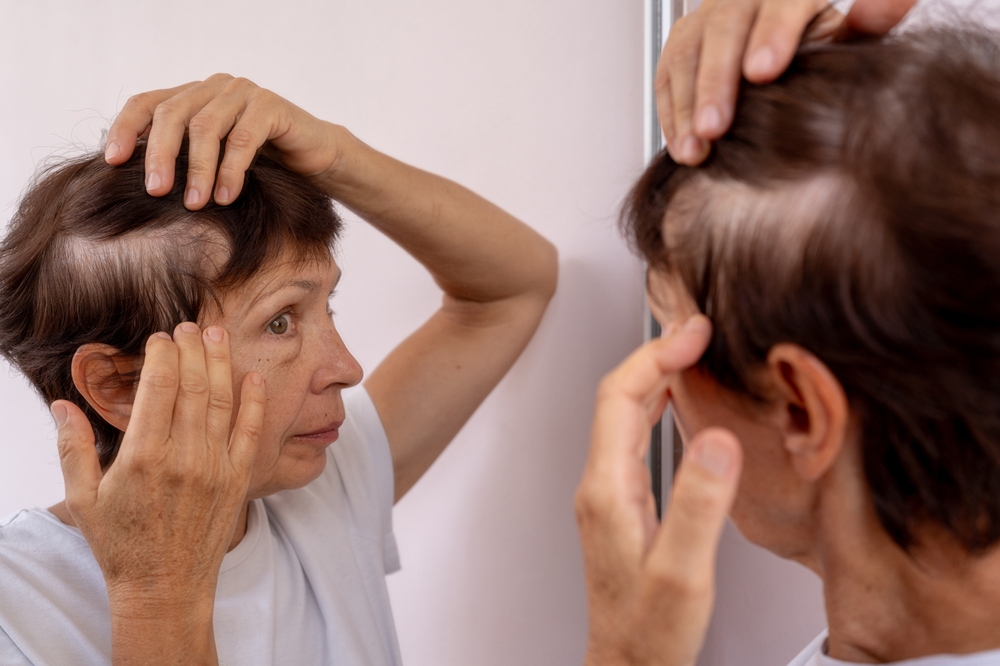
At What Age Does Hair Start to Thin?
The honest answer is: earlier than most people expect. Thinning rarely arrives overnight. It is a gradual fade that often starts long before it becomes obvious in the mirror.
Men vs Women
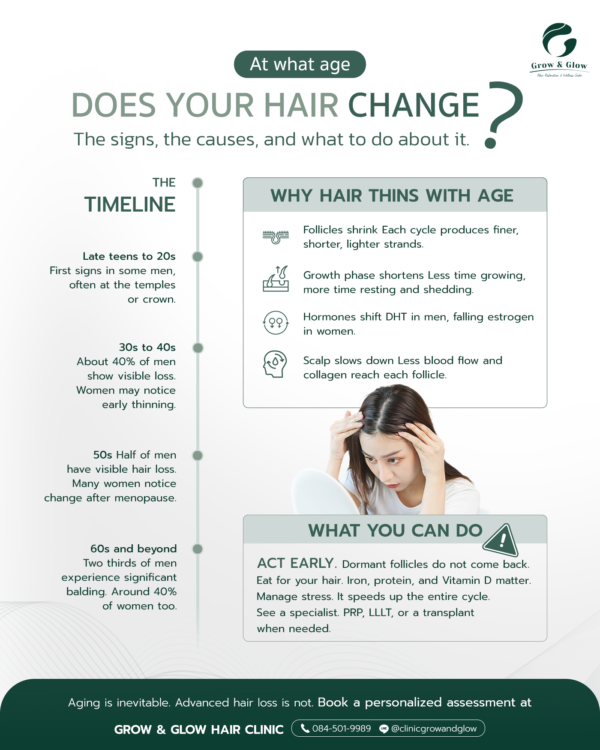
- Men can start noticing thinning in the late teens or early 20s. By age 50, around half of men show visible hair loss, and by 60, many are noticeably bald.
- Women usually notice it later, often in their 40s or after menopause, when hormonal shifts affect hair density.
- By 65, roughly 40% of women and over half of men experience some balding or significant thinning.
The Slow Fade
Hair loss connected to age is rarely sudden. Each strand becomes finer with each new growth cycle, and follicles slowly produce shorter, lighter hairs. Many people only realize how much has changed when they look back at old photos. The earlier you notice the shift, the more options you have to protect what you have.
Why Does Hair Get Thinner as You Age?
Several biological shifts work together to thin your hair as you age. Understanding them helps you target the right treatment instead of chasing quick fixes.
Follicular Miniaturization
This is the main driver behind aging changes in hair. Over time, susceptible hair follicles shrink and produce shorter, finer, and less pigmented strands. Eventually, some follicles stop producing visible hair altogether.
A Shift in the Growth Cycle
Hair grows in three phases, growth, transition, and rest. With age, the growth phase gets shorter, while the resting phase lasts longer. The result is fewer hairs growing at any given moment and more strands shedding.
Hormonal Changes
Hormones quietly shape how your hair behaves at every stage of life. In men, dihydrotestosterone (DHT), a byproduct of testosterone, binds to follicles on the crown and hairline and gradually shrinks them. The follicles on the back and sides of the scalp tend to resist DHT, which is why those areas usually keep their hair the longest. In women, falling estrogen during menopause weakens follicles, slows growth, and changes the way new hairs come back in. Thyroid shifts and other hormonal swings can speed things up further.
Reduced Blood Flow and Collagen
Scalp circulation and collagen production both decline with age. Less blood flow means less oxygen and fewer nutrients reach each follicle, which slows growth and weakens new strands. Collagen normally helps anchor follicles and support surrounding tissue, so when levels drop, hair has a harder time staying rooted. Sun exposure, smoking, and chronic stress can speed up this decline.
Can You Stop Age-Related Thinning?
Aging is inevitable, but how your hair changes with age is something you can influence. Two things make the biggest difference.
Early Intervention
The single biggest factor in long-term results is how soon you start. Once a follicle has been dormant for too long, it stops producing hair completely and cannot be revived by topical products. Treating thinning early, while follicles are still active, protects far more hair than waiting until bald patches appear. A specialist can scan your scalp and tell you which follicles are still working, which are weakening, and which have already shut down.
Lifestyle Factors
- Get enough iron, protein, and Vitamin D, since deficiencies are linked to thinning.
- Manage stress, as chronic stress disrupts the hair growth cycle and worsens shedding.
- Be gentle with your hair, avoiding tight styles, harsh chemicals, and excessive heat that weaken aging strands.
Professional Solutions at Grow & Glow Hair Clinic
When lifestyle changes are not enough, medical treatment can make a real difference. Every plan at Grow & Glow Hair Clinic starts with a personalized assessment to check whether your follicles are dormant or already lost, so the treatment matches your actual stage.
Non-Surgical Treatments
- PRP (Platelet-Rich Plasma) injections use concentrated growth factors from your own blood, prepared at 7 to 9 times the normal platelet level, to repair and stimulate hair roots.
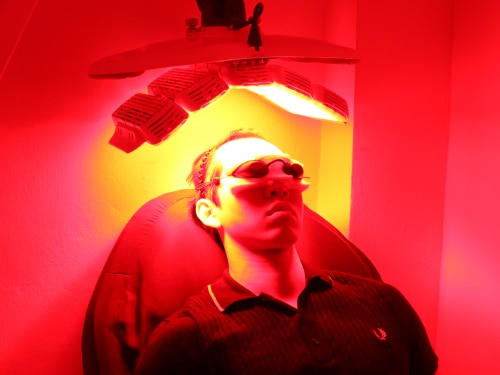
- Low-Level Laser Therapy (LLLT) uses red light wavelengths to boost blood flow in the scalp and re-energize weakened follicle cells.
- Meso Hair delivers vitamins and nutrients straight into the scalp to help control sudden shedding and support density.
Surgical Options
- FUE (Follicular Unit Excision) extracts grafts one by one for a natural look with minimal scarring.
- FUT (Follicular Unit Transplantation) allows a larger number of grafts in a single session for more advanced loss.
- Both options work best when planned around your remaining donor hair and long-term goals.
Advanced Hair Loss Is Treatable
Aging is part of life. Watching your hair quietly disappear is not. With early action and the right medical guidance, density and confidence can both be preserved well into later decades. Modern hair restoration is no longer a one-size-fits-all choice between doing nothing and going straight to surgery, and the right treatment depends on what your follicles look like today.
As a trusted hair loss treatment clinic in Bangkok, Grow & Glow Hair Clinic builds personalized plans for every stage of thinning, from the first signs of shedding to more advanced loss. Book a consultation today and let our specialists design a tailored plan for your hair health.
References:
- Aging changes in hair and nails. Retrieved April 25, 2026, from https://medlineplus.gov/ency/article/004005.htm
- Cellular Senescence: Ageing and Androgenetic Alopecia. Retrieved April 25, 2026, from https://karger.com/drm/article/239/4/533/836627/Cellular-Senescence-Ageing-and-Androgenetic
Frequently Asked Questions About Age and Hair Loss


