


Standards That Define a Reputable Hair Transplant Clinic
Key Takeaways
- A hair transplant is a permanent surgical procedure, and the choice of clinic is the most important factor influencing your long-term result.
- Verifiable surgeon credentials matter most. Prioritize ABHRS Diplomate status and ISHRS membership, supported by a clinic that specializes in hair restoration.
- A reputable clinic offers multiple recognized techniques, including FUE, FUT, and DHI, to match the right method to your individual case.
- Consultations should be physician-led, with an honest evaluation of donor density, scalp condition, and realistic expectations.
- Graft survival depends on careful dissection under high-magnification microscopes, proper holding solutions, and a sterile, hospital-grade environment.
- The first 12 months of structured aftercare, including professional washes, wound care, and supportive therapies such as LLLT, are essential to a successful outcome.
A hair transplant is a permanent surgical procedure, not a cosmetic touch-up. The outcome you live with for the next 10 to 20 years depends almost entirely on the qualifications of the surgeon and the standards maintained by the clinic. Choosing a hair transplant clinic is therefore a medical decision before it is an aesthetic one. The right clinic combines internationally recognized credentials, a documented surgical track record, and a structured medical approach to long-term care. The following standards reflect international best practice and are designed to help you evaluate any clinic with confidence.
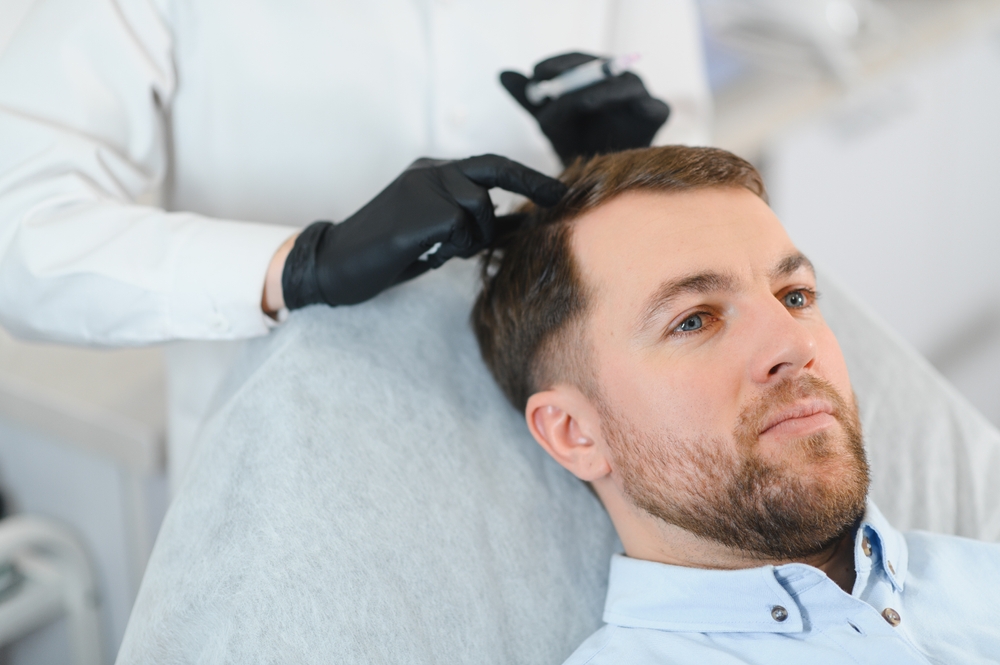
Surgeon Qualifications and Board Certification
Credentials are the foundation of patient safety. Hair restoration is a specialized surgical discipline that requires dedicated training, ongoing education, and adherence to formal ethical guidelines. The most respected international bodies have established clear standards for surgeon qualifications, and these should be your first reference point when evaluating any clinic.
Credentials That Genuinely Matter
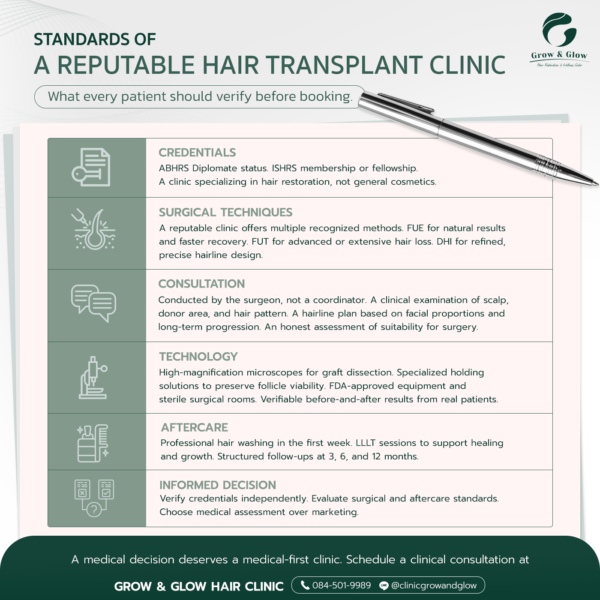
- Diplomate of the American Board of Hair Restoration Surgery (ABHRS) remains the highest specialty certification in this field, requiring a documented surgical track record, peer-reviewed case submissions, and both written and oral examinations.
- Membership or Fellowship with the International Society of Hair Restoration Surgery (ISHRS) reflects continued professional development and adherence to international standards.
- Choose a clinic where hair restoration is the primary specialty, not one of many cosmetic services. Specialization is directly linked to surgical precision and consistent outcomes.
At Grow & Glow Hair Clinic, every procedure is overseen by Dr. Benz, an ISHRS Graduate Fellow in Hair Restoration Surgery and a Diplomate of the ABHRS. The clinic operates with a dedicated focus on hair restoration, supported by a trained medical team.
A Range of Recognized Surgical Techniques
No single technique is suitable for every patient. Hair type, scalp laxity, donor density, and the extent of hair loss all influence which approach delivers the most natural, durable result. A clinic that offers only one method may be limited in its ability to recommend the best option for your case.
Established Techniques to Look For
- FUE (Follicular Unit Excision) harvests individual follicular units, leaving minimal scarring and supporting faster recovery, particularly for patients who wear shorter hairstyles.
- FUT (Follicular Unit Transplantation) allows a higher number of grafts in a single session, often the more effective approach for advanced or extensive hair loss.
- DHI (Direct Hair Implantation) uses an implanter pen for precise control of angle, depth, and direction, producing refined, natural-looking hairlines.
- A reputable clinic recommends the technique that fits your clinical needs, supported by a clear explanation of the rationale.

The Quality of the Initial Consultation
The consultation is both a clinical assessment and a reflection of the clinic’s standards. Under ABHRS guidelines, diagnosis and treatment planning are non-delegable medical acts. They must be performed by a qualified physician, not a coordinator or sales consultant. A thorough consultation will also rule out underlying medical conditions that may contribute to hair loss, such as thyroid disorders or autoimmune disease.
What a Proper Consultation Includes
- A direct examination of your scalp, donor area, and overall hair pattern, conducted by the surgeon.
- A hairline design developed around your facial proportions, age, and long-term hair loss progression, not a generic template.
- An honest assessment of suitability. A reputable clinic will recommend medical management before surgery if a transplant is not yet appropriate.
- Clear documentation of the proposed plan, expected outcomes, and any associated risks.
Transparent Results and Medical-Grade Technology
Graft count alone does not determine success. The survival rate of transplanted follicles depends on the precision of dissection, the conditions in which grafts are held, and the sterility of the surgical environment. Each of these factors is shaped by the technology and protocols a clinic uses, and together they distinguish a well-equipped medical facility from one operating on basic infrastructure.
Standards That Influence Outcomes
- High-magnification microscopes allow each follicular unit to be dissected with minimal trauma, preserving viability.
- Specialized holding solutions maintain follicle health and hydration during the time grafts are outside the body.
- FDA-approved equipment and modern, sterile surgical rooms minimize the risk of infection and meet international hygiene standards.
- Verifiable before-and-after results from the clinic’s own patients, rather than stock or composite images, provide transparent evidence of outcomes.
Comprehensive Aftercare and Long-Term Support
The first 12 months following surgery are critical to a successful outcome. New grafts must settle, the scalp must heal, and a temporary shedding phase, often referred to as shock loss, is part of normal recovery. Without structured guidance, patients may misinterpret these stages as treatment failure.
Elements of a Quality Aftercare Program
- Professional hair washing during the first week to clean grafts gently without dislodging them.
- Wound care guidance and clinical follow-ups to monitor healing and address any concerns early.
- Low-Level Laser Therapy (LLLT) sessions to support scalp circulation, accelerate healing, and stimulate new growth.
- Scheduled long-term reviews at three, six, and twelve months to track progress against the original treatment plan.
Making an Informed Decision
The most reputable clinic is rarely defined by price or marketing reach. It is defined by verifiable credentials, a documented track record of natural results, and a structured medical approach that treats hair restoration as a long-term clinical case rather than a single-day procedure. How to choose the right hair transplant clinic ultimately depends on three principles: confirm the credentials, evaluate the surgical and aftercare standards, and avoid clinics that rely on aggressive sales tactics in place of proper medical assessment.
As an ABHRS-certified hair transplant clinic in Thailand, Grow & Glow Hair Clinic combines internationally recognized expertise, multiple advanced techniques, and a structured aftercare program in a hospital-grade environment. Schedule a personalized consultation to receive a clinical assessment and a treatment plan designed specifically for your case.
References:
- Code of Ethics. Retrieved April 25, 2026, from https://abhrs.org/about-us/code-of-ethics/
Frequently Asked Questions About Choosing a Hair Transplant Clinic


