


A Guide to Exosome Hair Treatment and How It Works
Key Takeaways
Exosomes are tiny cell-derived vesicles that carry growth factors and signaling molecules involved in tissue repair and hair follicle activity. The treatment is delivered through scalp injections or microneedling, with sessions typically taking 15 to 45 minutes and minimal downtime. Early clinical evidence shows promising improvements in hair density and thickness, though large randomized trials are still limited. Exosome therapy works best on thinning or miniaturized follicles, not on completely bald areas, and is best viewed as a supportive treatment alongside proven options like minoxidil or surgical restoration rather than a standalone cure.
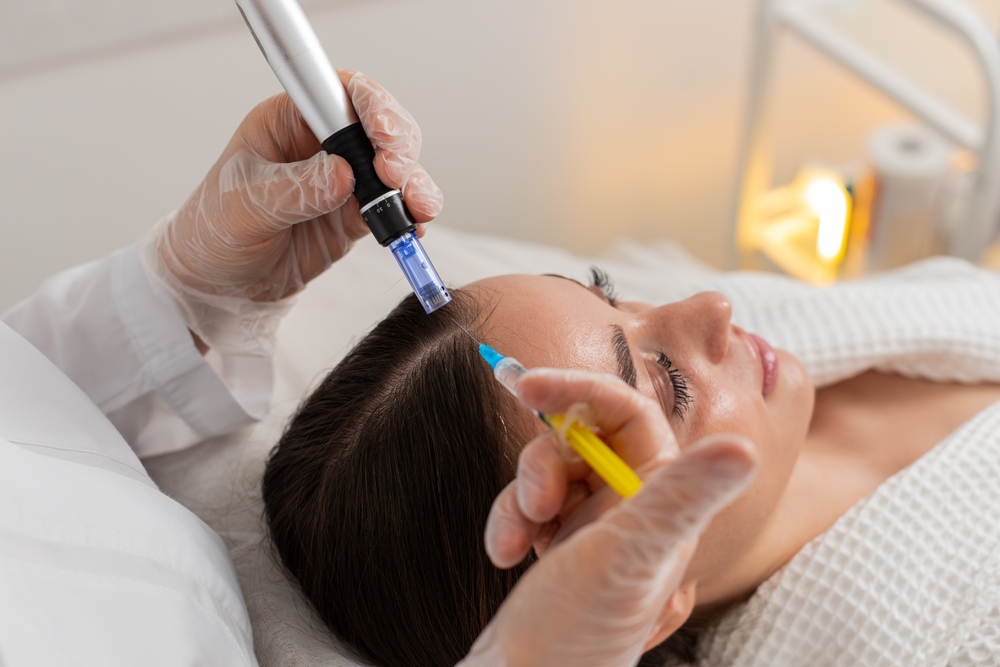
Over the past few years, exosomes have transitioned from research labs to hair clinics, often promoted as a next-gen alternative to PRP. The concept is attractive: a regenerative therapy using biological signaling molecules to reactivate dormant follicles and enhance scalp health non-surgically.
The truth is more complicated, as promising early research is still developing, and the treatment isn’t a perfect fit for every scenario. If you have been weighing whether exosome hair treatment is worth trying, here is a clear breakdown of how it works, what to expect, and where it sits among other options.
What Is Exosome Hair Treatment and How Does It Work?
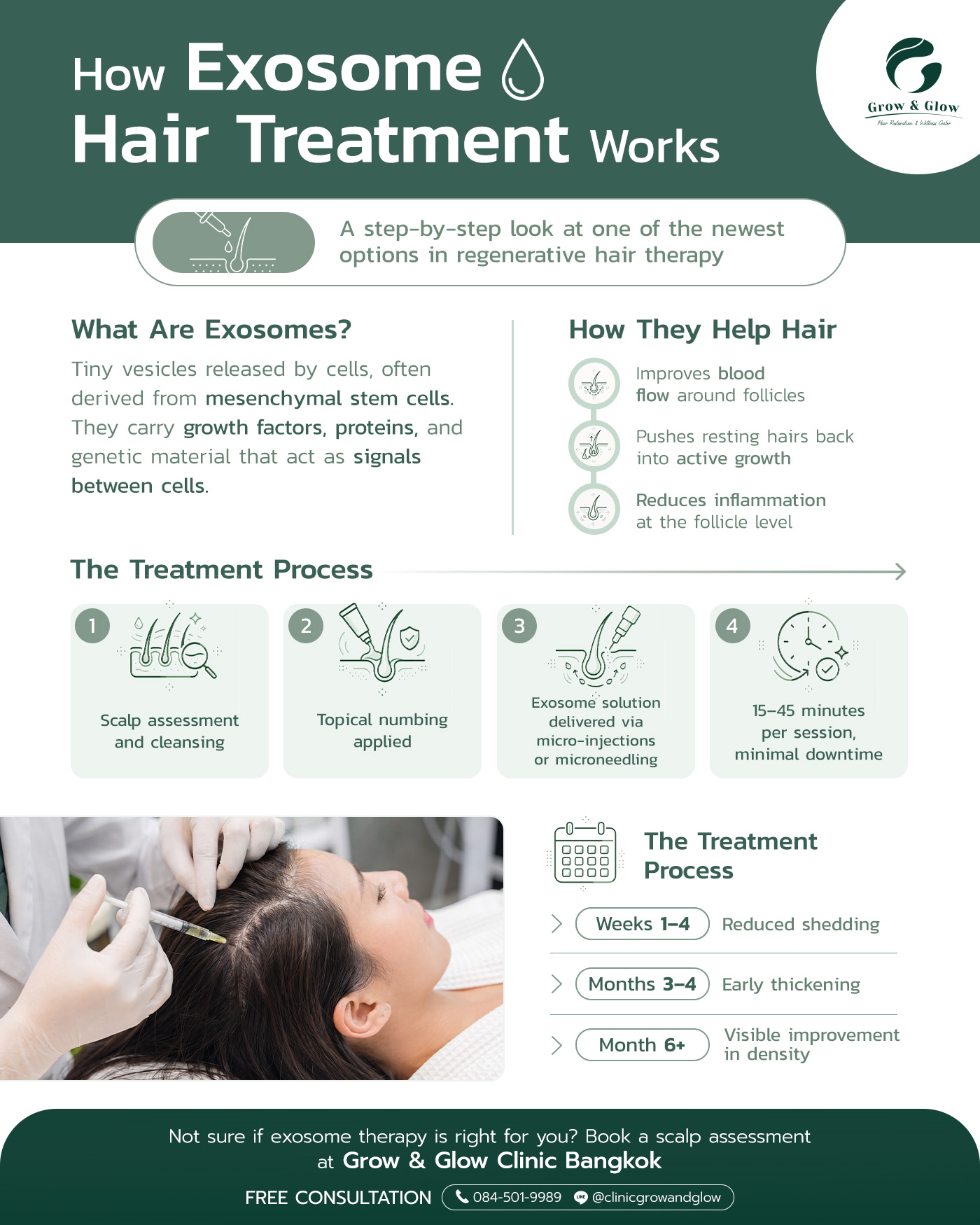
Exosomes are tiny extracellular vesicles released by cells, typically derived from mesenchymal stem cells sourced from tissues like adipose, umbilical cord, or bone marrow. They carry proteins, lipids, growth factors, and genetic material such as messenger RNA, which act as biological signals between cells.
In the context of hair loss, these signals are thought to work in three ways. They improve blood supply around the follicles, push hairs that are stuck in the resting phase back into active growth, and reduce inflammation at the follicular level. Preclinical and early clinical studies have shown improvements in hair density, hair thickness, and scalp coverage when exosomes are applied to the scalp.
This is also where the comparison to PRP comes in. PRP uses platelets drawn from your own blood, while exosome treatment for hair loss uses lab-prepared vesicles that may offer more consistent concentrations of active molecules from session to session.
How Exosome Treatment Is Performed
The procedure is straightforward and done in clinic, with a clear flow from prep to delivery:
- Scalp assessment and cleansing to evaluate the areas of thinning and prepare the skin
- Topical numbing is applied to keep the treatment comfortable
- Exosome delivery via fine micro-injections or microneedling, which creates small channels for the solution to absorb deeper into the scalp
- Session length of roughly 15 to 45 minutes from start to finish
Some clinics offer a single session followed by periodic boosters, while others recommend a short series of treatments spaced about 4 to 6 weeks apart. Downtime is minimal. You may have mild redness or slight tenderness for a day or two, but most people return to normal activities the same day.
Aftercare is also simple. You will usually be asked to avoid washing your hair for 12 to 24 hours and to briefly skip harsh styling chemicals. Beyond that, no special restrictions are needed.
What to Expect for Exosome Hair Treatment Before and After Results

Results from exosome therapy build gradually rather than appearing overnight. In the first few weeks, many patients notice a clear drop in daily shedding. Early thickening usually shows up around the 3 to 4 month mark, and visible improvements in density tend to become clearer by 6 months and beyond.
One important caveat: exosomes work best where follicles are still alive but underperforming. Areas of thinning, miniaturized hair, or early-stage hair loss respond more reliably than areas of long-standing slick baldness, where the follicles are no longer present. For those zones, surgical restoration is still the realistic path forward.
Response also varies from person to person, and the long-term durability of exosome therapy is not yet as well established as for treatments like minoxidil or transplants. It’s best to go in with realistic expectations and a clear assessment of your stage of hair loss.
Exosome Hair Treatment Side Effects and Risks
Exosome therapy has a favorable safety profile in the studies published so far, with most reports describing only mild and short-lived effects at the injection sites:
- Redness in the treated area, usually clearing within 24 to 48 hours
- Mild swelling that resolves on its own
- Tenderness or sensitivity for a day or two after the session
- Minor pinpoint bleeding at injection sites in some patients
Serious adverse events have been rare in clinical literature, but the bigger considerations sit on the regulatory and practical side. Exosome products are not uniformly regulated across countries, and there is no exosome product currently licensed by major regulators like the FDA or MHRA specifically for hair loss. The cost is also higher than standard options such as minoxidil or PRP, and quality can vary between providers depending on the source of the exosomes and how they are processed.
Most experts position exosome therapy as a supportive treatment that works best when paired with proven options, not as a standalone cure. A specialist assessment matters here, both to confirm that exosomes are appropriate for your stage of hair loss and to verify the quality of the product being used.
Explore Regenerative Hair Care with Grow & Glow
Exosome therapy can do a lot as a treatment for hair loss, but deciding whether it is right for you is best done after a proper scalp assessment. The treatment’s strength lies in supporting follicles that are still active but underperforming, which is why pairing it with a clear, professional diagnosis of your stage of hair loss usually delivers better results than relying on exosomes alone.
This is where we can help. At Grow & Glow Hair Clinic in Bangkok, we offer a full scalp analysis to determine whether non-surgical therapy, medical treatment, or surgical restoration is the right step for your stage of hair loss. Our clinic also provides specialized care for female patients, with customized hairline design and graft planning. Every consultation of ours is led by Dr. Benz, an ISHRS Graduate Fellow and ABHRS Diplomate with a full suite of surgical and non-surgical options.
Explore the right treatment with a hair transplant for women in Bangkok at Grow & Glow today. Book a consultation by contacting us at 084-501-9989 or visiting growandglowhairclinic.com.
References:
- Exosomes and Hair Regeneration: A Systematic Review of Clinical Evidence Across Alopecia Types and Exosome Sources. Retrieved on 13 May 2026 from https://www.dovepress.com/exosomes-and-hair-regeneration-a-systematic-review-of-clinical-evidenc-peer-reviewed-fulltext-article-CCID
- Exosomes for Treating Hair Loss: A Review of Clinical Studies. Retrieved on 13 May 2026 from https://pubmed.ncbi.nlm.nih.gov/39447204/
- Therapeutic potential of stem cell-derived exosomes in hair regeneration: A systematic review. Retrieved on 13 May 2026 from https://pmc.ncbi.nlm.nih.gov/articles/PMC12305264/
- Exosomes in trichology: A literature review. Retrieved on 13 May 2026 from https://www.ncbi.nlm.nih.gov/pmc/articles/PMC12814429/
Frequently Asked Questions About Exosome Hair Treatment


