


How to Spot the Common Causes of Hair Loss in Children
Key Takeaways
- Hair loss in children is more common than many parents realize, accounting for an estimated 3% of pediatric office visits.
- Causes fall into two broad groups: mechanical or friction-related, and medical conditions that require a proper diagnosis.
- The most common medical causes are tinea capitis, alopecia areata, telogen effluvium, and trichotillomania, each with distinct signs.
- Warning signs include a red or scaly scalp, sudden bald patches, scalp pain, and loss of eyebrows or eyelashes.
- Emotional distress or social withdrawal linked to hair loss is a signal that a professional evaluation is needed sooner rather than later.
- Most causes are highly treatable when caught early, but self-treating with adult hair products can delay recovery or worsen the issue.
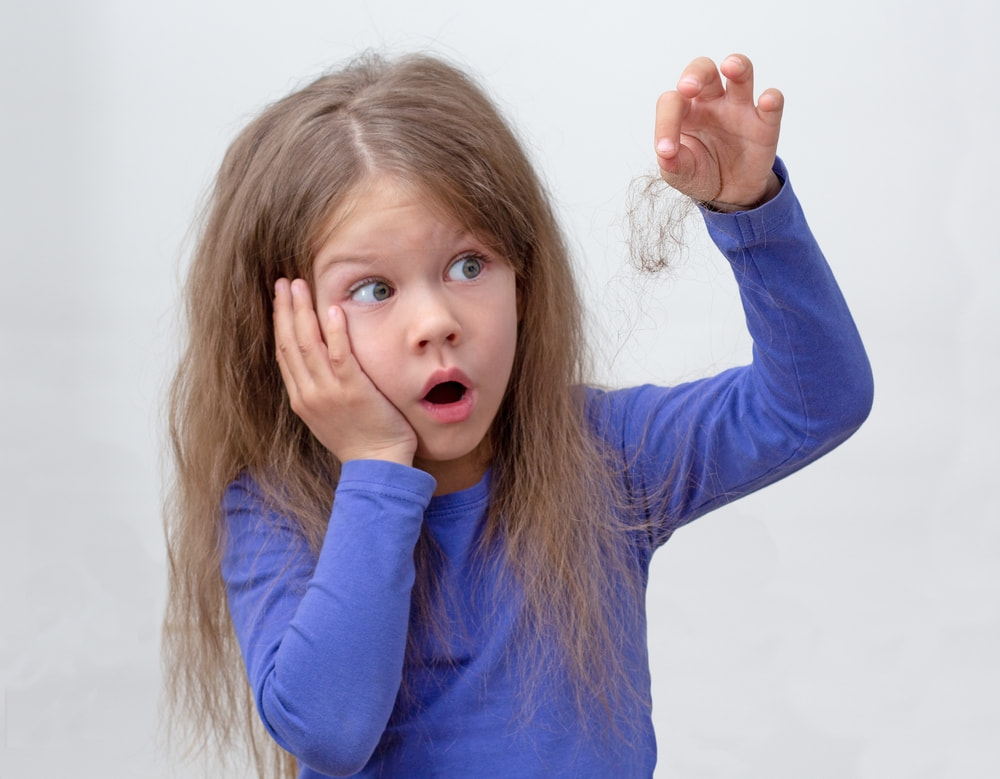
Discovering extra hair on your child’s pillow or hairbrush can be alarming for any parent. While thinning strands are often associated with aging adults, hair loss in children is more common than most people realize, accounting for an estimated 3% of pediatric office visits. Understanding the common triggers, the warning signs to look for, and when to seek a professional evaluation can turn a stressful moment into a manageable one. The good news is that most causes of hair loss in children are highly treatable when identified early and diagnosed correctly.
Medical vs. Non-Medical Hair Loss in Kids
Before assuming the worst, it helps to know that not all shedding is a cause for concern. Losing roughly 50 to 100 hairs a day is a normal part of the growth cycle. The question is whether the loss is diffuse and everyday, or localized and unusual.
Mechanical and Friction Hair Loss
Newborn shedding is completely normal and temporary. It often comes from the friction of a baby’s head rubbing against a crib mattress, and the hair grows back on its own during the first year of life. Traction alopecia is another non-medical cause, seen in older children whose hair is regularly styled in tight ponytails, braids, or buns. The constant pulling stresses the follicles and can lead to thinning around the hairline or wherever the tension is greatest. Loosening styles and giving the scalp a break usually allows the hair to recover fully.
The Most Common Medical Causes of Hair Loss in Children
When the loss is not explained by styling or friction, one of the following conditions is often behind it. Knowing what causes hair loss in children starts with recognizing how each one shows up on the scalp.
Tinea Capitis (Scalp Ringworm)
Tinea capitis is a highly contagious fungal infection of the scalp. It typically presents as patchy hair loss with broken, stubby hairs, along with red, scaly, or inflamed skin. The scalp is often itchy, and in some cases, small black dots appear where hairs have broken off at the surface. Because it spreads through direct contact, shared hats, brushes, and pillowcases can pass the infection between siblings and classmates.
Alopecia Areata
Alopecia areata is an autoimmune condition where the immune system mistakenly attacks the hair follicles. It usually appears as smooth, perfectly round or oval bald patches that develop suddenly, with no scaling or broken hairs. Some children also experience nail changes such as pitting or ridging. In more severe cases, alopecia areata can extend to the eyebrows and eyelashes.
Telogen Effluvium
This is a diffuse form of shedding triggered by a physical or emotional shock. Common triggers include a severe illness with high fever, surgery, significant emotional stress, or a sudden nutritional deficiency such as low iron or zinc. The hair typically thins across the whole scalp about two to three months after the triggering event, which can make the cause harder to identify without a careful history.
Trichotillomania
Trichotillomania is a behavioral condition where a child compulsively pulls, plucks, or twists their own hair out. The bald areas tend to be irregular in shape, with broken hairs of varying lengths, and often appear on the side of the child’s dominant hand. It is frequently linked to anxiety or stress and responds best to a combined medical and psychological approach.
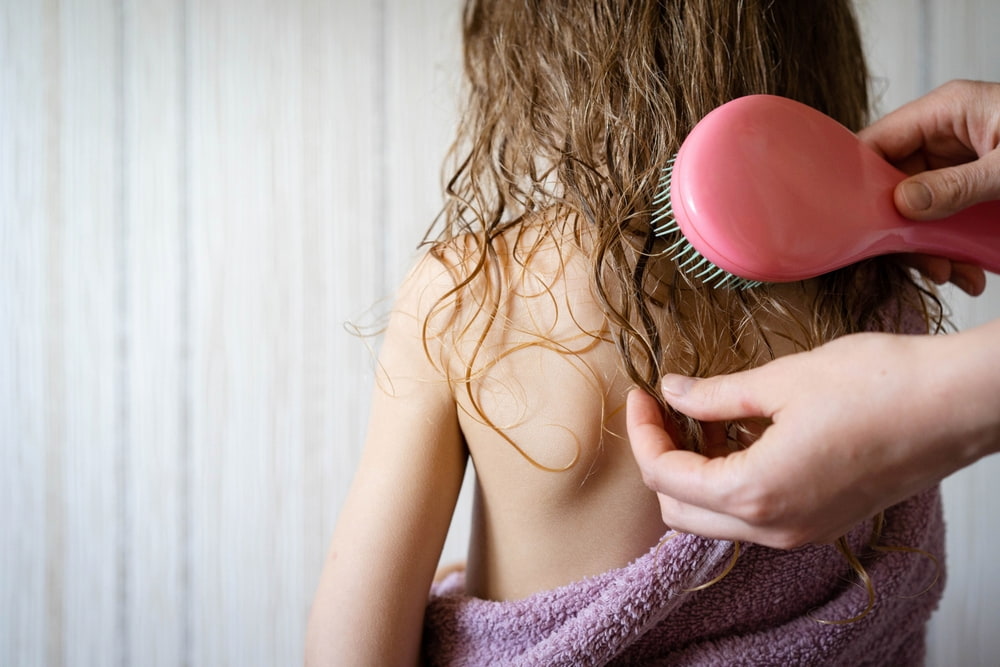
When Should Parents Worry?
Some signs point to a condition that home care simply cannot address. A professional consultation is the right next step if you notice any of the following.
- The hair loss is paired with a red, scaly, itchy, or swollen scalp, all signs of a possible infection.
- Hair loss appears in distinct, completely bald patches rather than general thinning.
- Your child complains of pain, tenderness, or burning on the scalp.
- Eyebrows or eyelashes begin to thin or fall out along with scalp hair.
- Your child shows signs of social withdrawal, anxiety, or distress about their changing appearance.
Emotional impact matters as much as the physical signs. Visible hair loss at a young age can affect confidence and self-image, so acting early protects both your child’s health and their sense of well-being.
Why a Professional Assessment Matters
Pediatric hair loss looks similar across many conditions, but the treatments are very different. A fungal infection needs antifungal medication, alopecia areata is managed with immune-based therapy, and behavioral pulling often needs psychological support alongside dermatological care. Treating a child with over-the-counter adult products or generic hair oils can delay healing and, in the case of infections, allow the condition to spread to siblings or classmates. A qualified specialist uses history, scalp examination, and simple diagnostics such as fungal screens or a hair pull test to identify the true root cause and match it to the right treatment.
How Grow & Glow Supports Families
Grow & Glow Hair Clinic offers compassionate, evidence-based evaluations for children and adults alike. Every consultation is led by Dr. Benz (Dr. Patra Pinyopawasutthi), a hair restoration specialist holding elite international credentials, including certification from the American Board of Hair Restoration Surgery (ABHRS) and Fellowship from the International Society of Hair Restoration Surgery (ISHRS). The clinic focuses on accurate diagnostics, personalized treatment plans, and a non-intimidating environment that keeps young patients comfortable throughout the process.
You do not have to navigate this alone or rely on internet forums for answers. As a trusted hair clinic in Bangkok, Grow & Glow Hair Clinic welcomes parents seeking clear, expert guidance. Book an in-person consultation today to protect your child’s hair health and restore your peace of mind.
References:
- A Practical Approach to the Diagnosis and Management of Hair Loss in Children and Adolescents. Retrieved in June, 2026, from https://pmc.ncbi.nlm.nih.gov/articles/PMC5522886/
Frequently Asked Questions About Hair Loss in Children


