


What Actually Stops Hair Loss During Menopause
Key Takeaways
- Hair loss during menopause is driven by falling estrogen and progesterone, not by anything you did wrong.
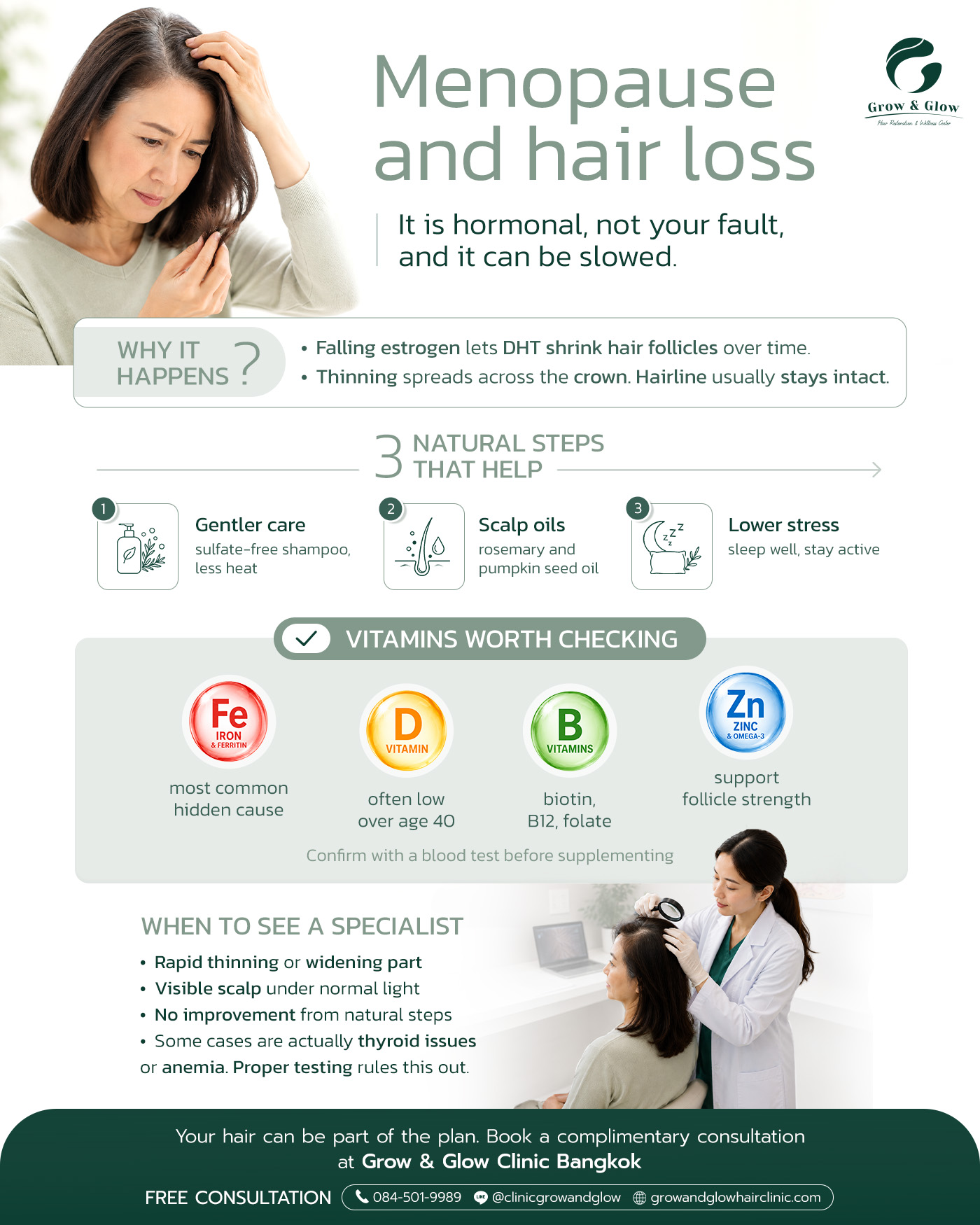
- With less estrogen protecting the follicles, DHT has a stronger effect and can shrink them over time, mainly across the crown while the frontal hairline stays intact.
- Gentler hair care, scalp-friendly oils, and better sleep and stress management can meaningfully slow shedding.
- Low iron, ferritin, vitamin D, and B vitamins are common hidden contributors and are worth checking with a blood test.
- Rapid thinning, a widening part, or visible scalp are signs it is time to move past home care and see a specialist.
- Some cases that look like menopausal hair loss are actually thyroid problems or anemia, which need separate testing to rule out.
Hair loss during menopause is something most women are never warned about, but a thinner ponytail or wider part in your 40s or 50s is more common than you think. It can feel sudden even though the changes have usually been building quietly for months. It is driven by hormonal changes, not anything you did wrong, and there are real steps that can slow it down. This guide explains what to do for hair loss during menopause, how to address it naturally, the vitamins that matter, and when it is time to see a specialist.
What Causes Hair Loss During Menopause?
The shift starts with hormones, not habits. During menopause, estrogen and progesterone levels drop, which shortens the hair’s growth phase and causes strands to grow finer and shed more easily. Understanding this mechanism is the first step toward addressing it, because it explains why the thinning shows up gradually rather than overnight.
- Estrogen normally protects hair follicles from androgens. With less of it circulating, DHT has a stronger effect and can gradually shrink the follicles.
- Progesterone also plays a role, since it naturally limits how much testosterone converts into DHT. When progesterone falls, that limit weakens.
- The resulting thinning is usually spread across the top and crown of the scalp, while the front hairline typically stays intact, a pattern that sets it apart from male-pattern baldness.
This diffuse pattern is often called female pattern hair loss, and it is one of the most common changes women experience during and after the menopausal transition. Recognizing that this is a hormonal shift, rather than a sign of an underlying illness, can also ease some of the worry that comes with noticing it for the first time.
How Can I Stop Hair Loss During Menopause Naturally?
If you are asking how can I stop hair loss during menopause, the answer starts with protecting the hair you have while supporting the scalp underneath. None of these steps will fully reverse hormonal thinning, but together they can meaningfully slow it down.
- Switch to a sulfate-free shampoo, cut back on heat styling, and avoid tight hairstyles that pull on already fragile strands.
- Scalp-friendly oils like rosemary and pumpkin seed may help support healthier growth when used regularly and consistently.
- Manage stress, sleep well, and stay active, since high stress and poor sleep can speed up shedding through their own hormonal effects.
Consistency matters more than intensity here. Small daily habits, applied over several months, tend to produce more noticeable results than an aggressive short-term routine, and they are far easier to sustain long term.
Best Vitamins and Foods for Menopause Hair Loss
Nutrition plays a bigger role in midlife hair health than most people expect, and a few specific nutrients tend to matter most. Hormonal changes during menopause can shift how the body absorbs and uses these nutrients, which is part of why deficiencies become more common at this stage of life.
- Iron and ferritin are often low in midlife women and are one of the most common hidden causes of shedding, so include iron-rich foods like lean meat, lentils, and leafy greens.
- Vitamin D supports the hair growth cycle and is commonly low in women over 40.
- B vitamins such as biotin, B12, and folate support keratin production and a healthy scalp.
- Protein at every meal, plus zinc and omega-3 fats from fish or seeds, keeps follicles strong and reduces inflammation around the roots.
Food first is the smart approach, with supplements only after a blood test and a conversation with your doctor. Taking high doses without confirming a deficiency rarely helps and can occasionally cause side effects, especially with fat-soluble vitamins that build up in the body over time. A simple panel checking ferritin, vitamin D, and thyroid function gives a much clearer picture than guessing which supplement to try first.
When Natural Steps Are Not Enough
Lifestyle changes help, but they have limits, and knowing when to move beyond them protects your long-term results. Waiting too long to seek professional input can mean losing more density than necessary before treatment begins.
- If you notice rapid thinning, a widening part, or visible scalp, it is time to stop self-treating and see a specialist.
- Some cases that look like menopausal hair loss are actually thyroid problems or anemia, which need proper testing to identify.
- A specialist may recommend treatments such as minoxidil, low-level laser therapy, PRP, or a hair transplant when natural steps no longer keep up with the shedding.
A proper diagnosis matters because these conditions can overlap. A woman going through menopause can also have an undiagnosed thyroid issue at the same time, and treating only the hormonal side would leave part of the problem unaddressed.
Get the Right Help for Menopausal Hair Loss
A specialist can tell you exactly what is causing your hair loss and what realistic options look like for your stage of menopause, rather than leaving you to guess based on general advice. Grow & Glow Hair Clinic is a trusted hair transplant clinic in Thailand offering proven treatments and modern hair restoration techniques for women navigating this stage of life. Every patient receives a personalized plan based on their pattern of hair loss, overall health, and goals, rather than a one-size-fits-all protocol.
Menopause changes your hair, but the right plan can change it back. Book a complimentary consultation at Grow & Glow Hair Clinic for a one-on-one assessment and a clear path forward.
References:
- Menopause. Retrieved June, 2026, from https://www.who.int/news-room/fact-sheets/detail/menopause
Frequently Asked Questions About Hair Loss During Menopause


