


What Hard Water Does to Your Hair and Scalp
Key Takeaways
Hard water is more likely to dry out and roughen the hair shaft, causing breakage, than to trigger true hair loss from the follicle. Breakage and shedding look alike but differ: broken pieces are short and uneven, while shed hairs come out full length, often with a small bulb at the root. Research on hard water effects on hair is split, with one study finding no change in strand strength and another finding it reduced, though neither links hard water to baldness. A water softener can improve how hair feels and reduce mineral buildup, but it is not a proven fix for genetic, hormonal, or medical thinning. If thinning continues despite gentler hair care, a hair loss treatment clinic in Bangkok can assess whether the follicles are still active.
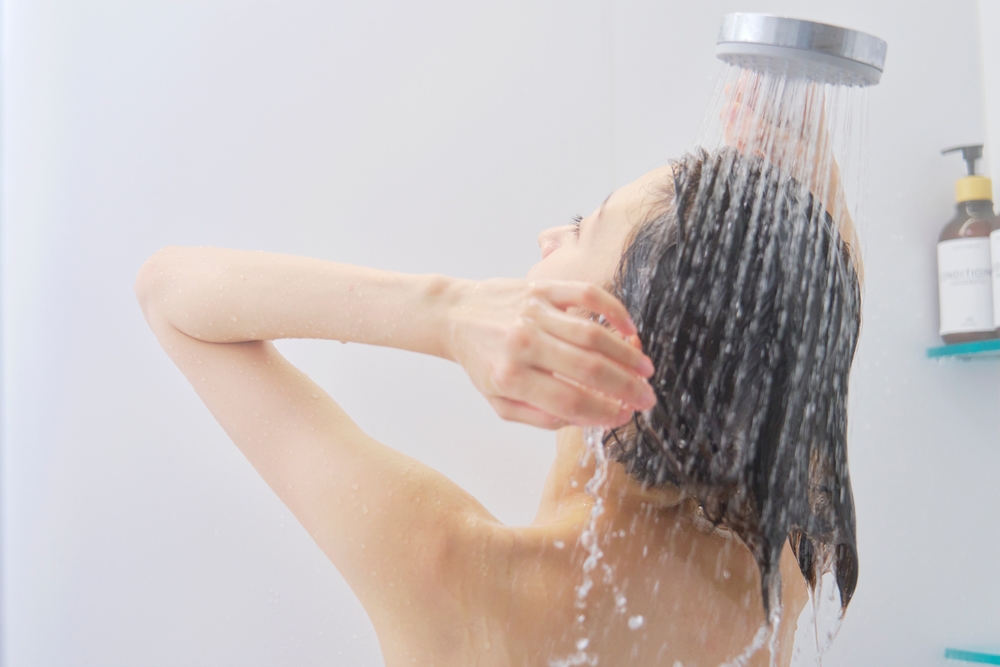
When you find extra strands clogging the drain and your hair feels coarse regardless of how much conditioner you apply, it’s understandable to question if the shower water is responsible, particularly in areas with mineral-rich tap water. But can hard water actually make your hair fall out at the root? Although current evidence does not back this up, it can cause the hair shaft to become dry and brittle enough to break, and broken hair is often mistaken for shedding.
But can hard water cause hair loss? Here’s how to tell breakage from true hair loss, what a water softener can and cannot do, and when thinning is worth a professional look.
What the Research Says About Hard Water and Hair Loss
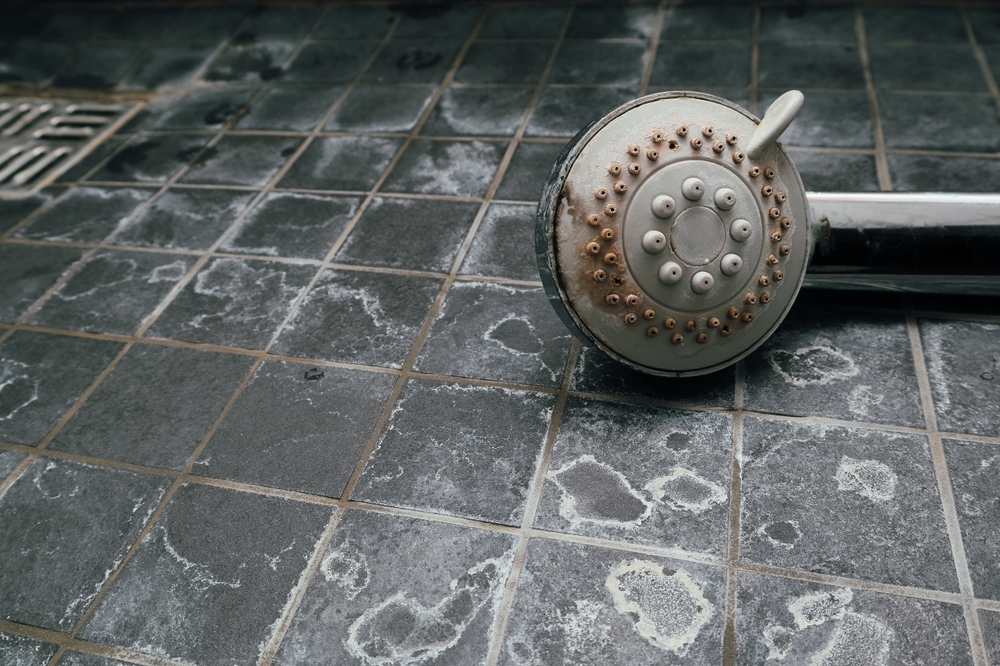
Hard water has not been shown to cause true, follicle-level hair loss. Hard water is water with higher levels of dissolved minerals, mainly calcium and magnesium, and you often spot it as the chalky limescale around taps and showerheads, though a water test is what confirms it.
Those minerals leave a residue on the hair shaft that makes strands feel rough, look dull, and tangle more easily, which makes them more likely to break. That affects the hair you already have, not the follicle that grows it.
The studies on hard water hair loss reflect that split. In one controlled study, hair was soaked in hard and distilled water over weeks with no notable difference in strength or elasticity, but a different study found that hard water weakened the strands. Neither associates hard water with androgenetic hair loss, alopecia areata, or irreversible follicle shutdown. The situation is unclear regarding breakage but clear on the bigger matter: it’s a hair-quality problem, not a reason for baldness.
Telling Hard Water Breakage Apart From Real Hair Loss
The quickest way to settle your worry is to look closely at the hair you are losing. How do you tell hard water damage apart from real hair loss? It comes down to what the fallen strands look like and where the change is showing up.
Breakage tends to leave short, uneven pieces, along with frizz, split ends, and strands that snap mid-length rather than slide out whole, and it often gets more noticeable after you change water sources. True shedding looks different: the hairs come out at full length, frequently with a small bulb at the root, and the change shows up as a widening part, a thinner ponytail, or more visible scalp over time.
Having fragile, hard-water-roughened hair combined with an independent cause of thinning is also possible. This is why water quality appears as only one item among many. Genetics, hormonal fluctuations, thyroid alterations, nutrition, scalp inflammation, specific medications, and tight styling are all clinically significant factors, and only an evaluation can determine which one affects you.
How Hard Water Shows Up in Daily Hair Care
How noticeable the hard water effects on hair are depends on how hard the water is, your hair type, whether it is color-treated, and how sensitive your scalp is. A few patterns come up again and again:
- Dry, dull, rough texture, as mineral residue coats the strand and makes it feel stiff or straw-like.
- More tangling, frizz, and split ends, because a rougher surface creates friction between strands.
- Fading or brassiness in colored hair, with tones shifting faster than expected.
- An itchy or flaky scalp, though persistent redness, pain, or scaling is worth checking for a condition such as dermatitis or psoriasis rather than pinning on the water.
The primary common feature among all of these is their look and texture. Nonetheless, none of these should be interpreted as the follicle being harmed.
Does Softening the Water Help Hair Thinning?
A water softener may help with hair thinning that is really breakage in disguise, but it is not a treatment for thinning caused by genetics, hormones, or a medical condition. A softener reduces the calcium and magnesium in your water, which cuts the residue that roughens and weakens the shaft.
Most individuals who change to soft water notice their hair becoming smoother and rinsing cleaner, and they find that shampoo and conditioner are more effective, sometimes to the extent that less product is needed. However, the evidence does not demonstrate that softened water promotes hair regrowth or enhances hair density. Softer water won’t alter thinning if it stems from the follicle rather than the hair shaft.
When weighing up hard water vs soft water on hair, it helps to know the difference between a whole-home softener and a shower filter, too. A softener conditions the water throughout the whole house, whereas many shower filters are designed to decrease chlorine or sediment instead of hardness. Before assuming the filter will help, check its rating to see if it addresses hardness.
Protecting Hair From Hard Water Without Overcorrecting
You can limit hair damage from hard water without making drastic changes to your routine. Keep the goal on gentler hair, not an aggressive reset.
- Use a clarifying or chelating shampoo occasionally to lift mineral and product buildup, and follow it with conditioner so hair does not end up stripped and dry.
- Replenish moisture with conditioner, the odd hydrating mask, and gentler habits like wide-tooth combing and patting hair dry instead of rubbing.
- Check your water if you suspect it is hard, using visible limescale or a simple home hardness test as a starting point before deciding on a filter or softener.
- Resist the urge to overcorrect. Daily clarifying washes or harsh homemade rinses can leave hair drier and make it harder to tell what is really causing the shedding.
Visit Grow & Glow Clinic When Real Breakage Happens
Hard water is far more likely to leave your hair dry, dull, and prone to snapping than to cause true hair loss, with the research on strand strength split between no effect and a measurable drop, and a water softener able to ease buildup without reversing genetic, hormonal, or medical thinning. When the change in your hair does not improve once you have addressed the water, that is the signal to have it looked at properly.
Grow & Glow Clinic is here to help with that. Led by Dr. Patra Pinyopawasutthi (Dr. Benz), an ISHRS Graduate Fellow and ABHRS Diplomate with credentials recognized internationally, our clinic provides in-person scalp and hair assessments that separate hard-water breakage from an actual pattern of hair loss. In cases where follicles remain active, non-surgical treatments like PRP, Meso Hair Grow injections, and Low Level Laser Therapy may be considered within a personalized plan.
Explore Grow & Glow’s hair loss treatment clinic in Bangkok services today. Book a complimentary in-person consultation with Dr. Benz and get a scalp and hair assessment to confirm what is really behind the thinning, whether hard water is involved or not.
References:
- Effects of Hard Water on Hair. Retrieved October 6, 2026, from https://pmc.ncbi.nlm.nih.gov/articles/PMC3927171/
- To Evaluate and Compare Changes in Baseline Strength of Hairs after Treating them with Deionized Water and Hard Water and its Role in Hair Breakage. Retrieved October 6, 2026, from https://pubmed.ncbi.nlm.nih.gov/30034190/
- Hair Loss: Who Gets and Causes. Retrieved October 6, 2026, from https://www.aad.org/public/diseases/hair-loss/causes
Frequently Asked Questions About Hard Water and Hair Loss


