


How Hair Thinning Differs From Actual Hair Loss
Key Takeaways
- Hair thinning is a gradual drop in hair density where strands grow finer over time, while hair loss is active shedding from the scalp.
- Thinning often comes before visible hair loss, especially in genetic pattern baldness, so spotting the signs early matters.
- Causes overlap, including genetics, hormones, stress, and nutrition, but treatments differ based on what is really going on.
- Misreading the condition leads to wasted time and money on the wrong products or routines.
- Treatments range from non-surgical options like PRP and medication to hair restoration procedures such as FUE and DHI.
- If shedding does not slow down, your part keeps widening, or bald patches appear, it is time to see a hair specialist.
Finding more strands on your pillow or noticing your part looks wider than last year can be unsettling. Many people use the words interchangeably, but thinning hair vs hair loss are not exactly the same thing. Knowing which one you are dealing with helps you choose the right treatment early, and that timing often makes the biggest difference in long-term results. This guide breaks down both conditions, their causes, and when it is time to consult a specialist at Grow & Glow Hair Clinic.
What Is Hair Thinning?
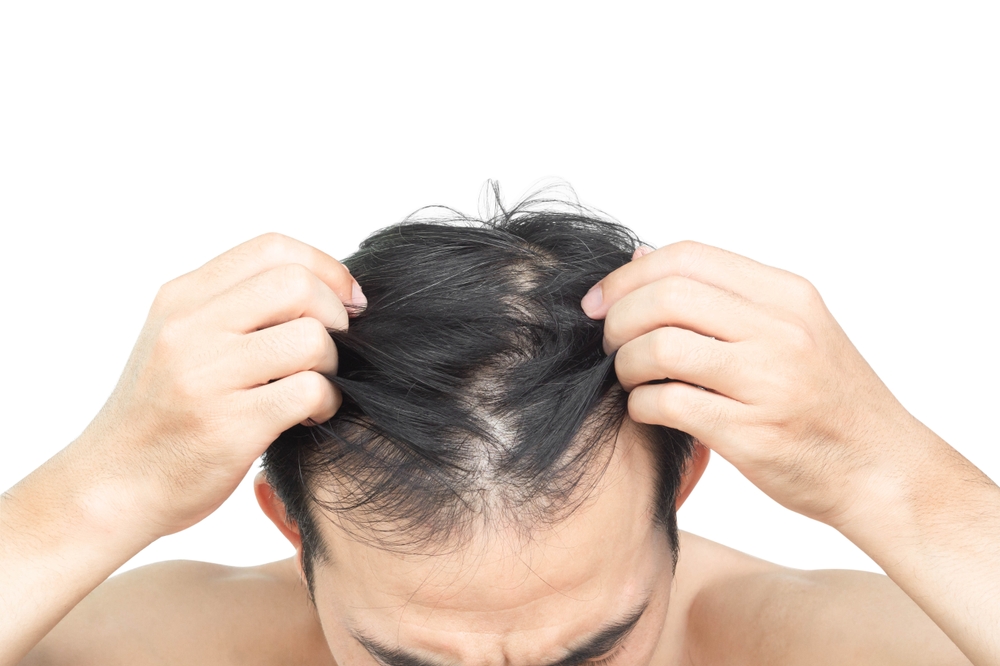
It is a gradual reduction in hair density across your scalp. The follicles are still alive and producing strands, but each strand becomes finer, weaker, and shorter over time. You usually notice it first at the crown, along the part line, or as an overall drop in volume.
Common Causes of Hair Thinning
- Genetics, often early-stage androgenetic alopecia passed down in families.
- Hormonal shifts during pregnancy, menopause, or thyroid changes.
- Stress and lifestyle pressure that disrupt the natural growth cycle.
- Nutritional gaps, especially in iron, protein, and key vitamins.
- Overstyling, heat tools, and chemical treatments that weaken strands.
Signs You May Have Hair Thinning
- Your part line looks wider than it used to.
- Hair feels flat with less body when styling.
- Your scalp shows through more clearly under bright light.
- Ponytails feel thinner in your hand.
What Is Hair Loss?
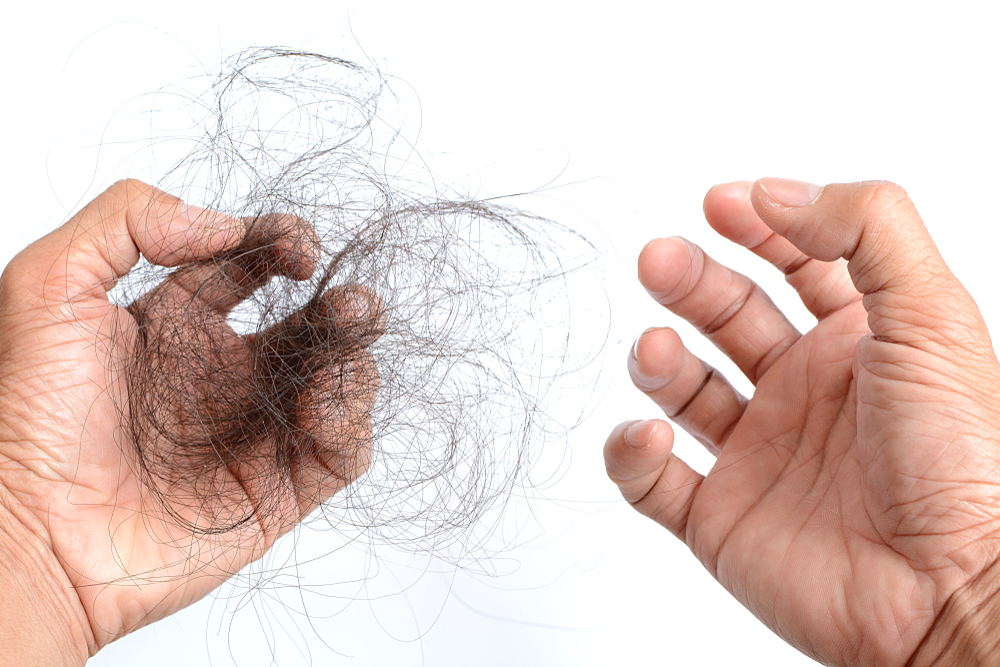
If thinning is about strands getting finer, then what is hair loss comes down to active shedding. Hair falls from the scalp faster than it is replaced, and the change is often more sudden and obvious. It can be temporary, like postpartum shedding, or progressive, like pattern baldness.
Common Causes of Hair Loss
- Androgenetic alopecia, the most common form of pattern hair loss.
- Telogen effluvium, often triggered by major stress, illness, or surgery.
- Medical conditions such as thyroid disorders or autoimmune disease.
- Postpartum shifts and other hormonal changes.
- Side effects from certain medications or treatments.
Signs You May Have Hair Loss
- Shedding well above the normal range of around 100 strands a day.
- Hair coming out in clumps when washing or brushing.
- Visible bald patches or a hairline that keeps moving back.
- A sudden, noticeable drop in overall hair density.
Thinning Hair vs Hair Loss: Key Differences
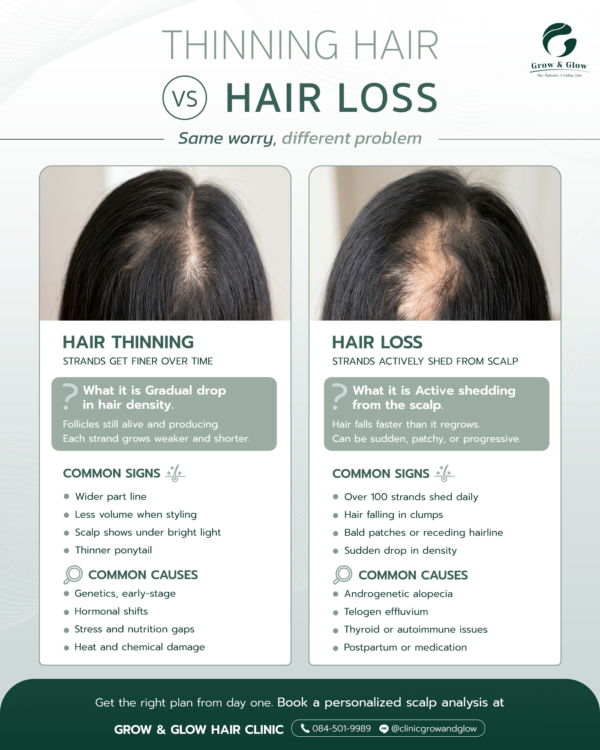
The clearest way to understand the difference between hair loss and hair thinning is to look at four points side by side.
Density vs Shedding
Thinning means lower density with the same follicles still working. Hair loss means active shedding, with follicles moving into the resting phase or shutting down.
Speed of Change
Thinning happens slowly over months or years. Hair loss can come on rapidly, sometimes within weeks of a trigger.
Visibility
Thinning is subtle and often spotted first while styling. Hair loss tends to be obvious, with patches, clumps, or a clearly receding hairline.
Reversibility
Both can be managed if treated early. The outcome depends on the cause, the timing, and the right treatment plan.
Hair Loss vs Hair Thinning in Men
For men, the line between the two is often a timeline. Male pattern hair loss usually starts as thinning at the temples and crown. Strands shrink and grow shorter with each cycle, until the follicles stop producing visible hair. Without treatment, early thinning can progress into permanent loss. Acting early gives more options and better long-term results.
Why Identifying the Right Condition Matters
Treating thinning like full hair loss, or the other way around, often leads to wasted time and money. Each condition needs a different approach. Mild thinning may respond well to nutrition, gentler styling, and topical care. Active hair loss usually needs medical treatment, regenerative therapy, or in advanced cases, a hair restoration procedure. An accurate diagnosis from the start protects the hair you still have.
Treatment Options for Hair Thinning and Hair Loss
Non-Surgical Treatments
- Scalp treatments and medical-grade therapy to support follicle health.
- Platelet-Rich Plasma (PRP) injections that use your own platelets to encourage stronger growth.
- Topical and oral medications such as minoxidil and finasteride, prescribed and monitored by a doctor.
Hair Restoration Procedures
- Follicular Unit Excision (FUE) for natural results with minimal scarring.
- Direct Hair Implantation (DHI) for precise placement using a Choi implanter pen.
- Procedures suit candidates with stable donor hair and clearly defined areas of loss.
Lifestyle and Hair Care Adjustments
- A balanced diet with enough iron, protein, and key vitamins.
- Stress management through sleep, movement, and recovery time.
- Gentler routines with less heat, less tension, and softer styling.
When Should You See a Hair Specialist?
Some signs are worth taking seriously rather than waiting out. Book a consultation if you notice:
- Shedding that does not slow down after a few months.
- A part line that keeps widening or rapid loss of volume.
- A family history of pattern baldness on either side.
- No improvement after months of home remedies and over-the-counter products.
Why Consult Grow & Glow Hair & Beauty Center?
At Grow & Glow Hair Clinic, every plan starts with a personalized scalp and hair analysis to identify the real cause. From there, you get an accurate diagnosis, access to advanced treatments and technology, and a customized plan built around your condition. Ongoing monitoring keeps your progress on track, so you know what is working and what to adjust. As a trusted hair loss clinic in Bangkok, we focus on honest guidance and real results.
Get a professional assessment and receive a treatment plan designed for your hair condition. Book your consultation today and take the next step with expert guidance.
References:
- Hair Shedding or Hair Loss? Here’s How to Tell the Difference. Retrieved April 27, 2026, from https://www.nbcnews.com/select/shopping/hair-shedding-vs-hair-loss-explained-rcna260303
Frequently Asked Questions About Thinning Hair vs Hair Loss


